Why Do I Keep Rolling My Ankle?
Repeated ankle sprains are both a symptom and a cause of a weak and unstable ankle. Each time you twist or roll your ankle, the ligaments on the outside of your ankle can stretch or tear, creating a perpetual cycle of recurring injuries and ankle pain.
Chronic ankle instability occurs when the damaged ligaments fail to heal properly. The loose ligaments cannot protect your ankle from rolling outwardly. Symptoms of chronic ankle instability include:

Your ankle “gives way” when walking on uneven surfaces
Pain or tenderness in your ankle
Chronic ankle swelling
Feeling unstable or wobbly
Repetitive ankle sprains
FAQs


What causes ankle sprains?
What is lateral ankle instability and chronic ankle sprain?
Can't my ankle heal on its own?
Are there any potential consequences to putting off or not getting surgery for my chronic ankle sprains?
What Is a High Ankle Sprain?
The ankle syndesmosis is the joint between the tibia and the fibula near the ankle. If you twist your ankle badly or suffer a high-impact injury, syndesmosis ligaments can stretch or tear. This can make your ankle unstable and painful. These injuries are often called high ankle sprains and can sometimes happen along with a broken bone.
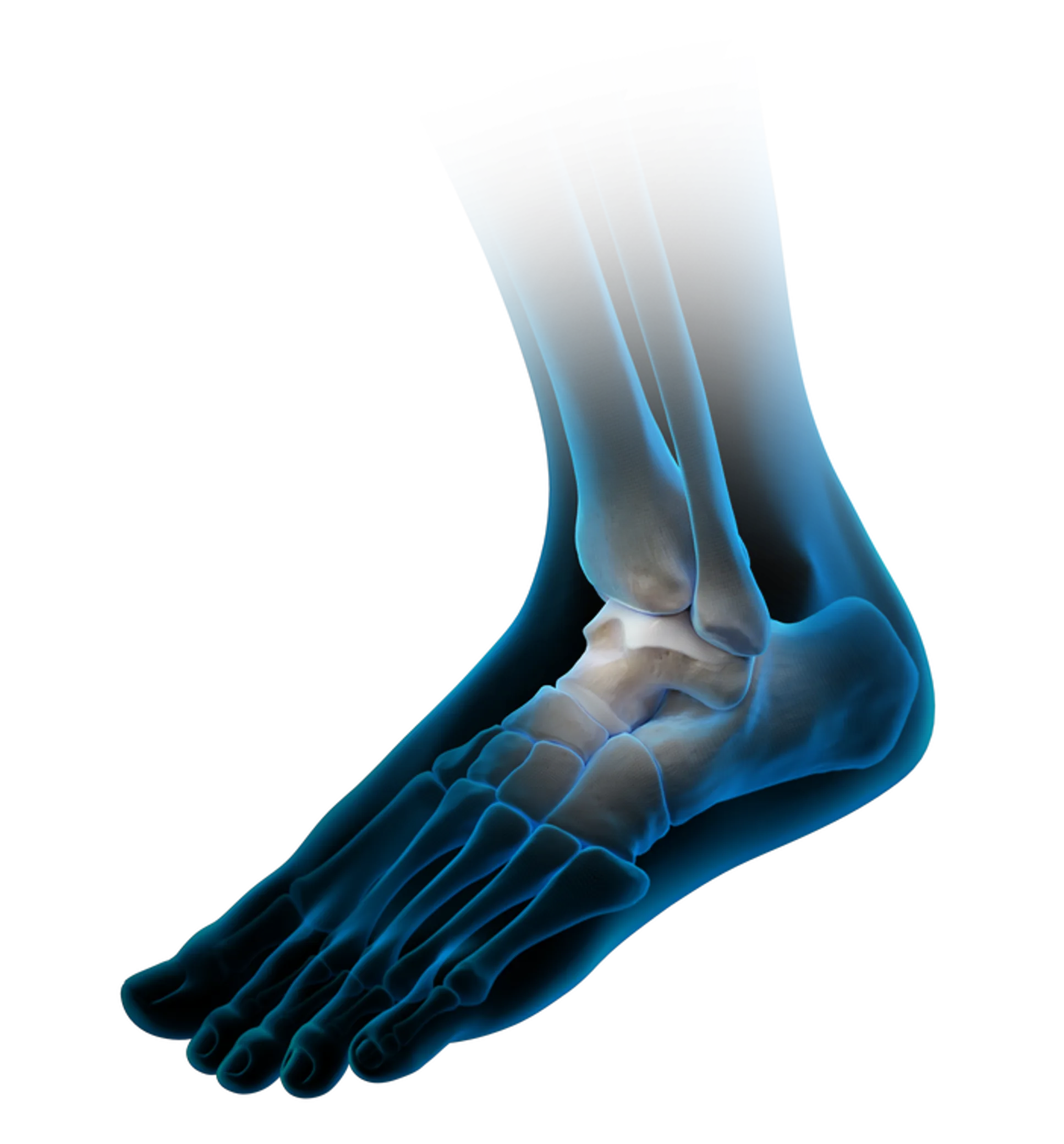

High ankle sprains occur in about 10% of ankle fractures3
Syndesmosis injuries (high ankle sprains) are common in athletes and can lead to chronic pain.
These injuries are common in high-impact sports like football, basketball, and soccer due to frequent twisting and turning of the ankle.
Recognizing the challenges posed by repeated injuries, we provide solutions for patients dealing with the persistent pain and instability associated with chronic ankle instability, as well as the complications that arise from high ankle sprains in high-impact sports. Our commitment is to support recovery and help patients regain their mobility and strength.
Overcome Ankle Sprains and Regain Your Confidence



Where Does It Hurt?
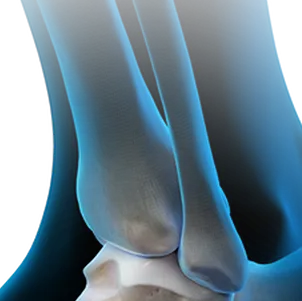
With chronic ankle instability, pain is often felt on the outer (or "lateral") side of the ankle, especially after being active or standing for a long time. If you have a high ankle sprain, the pain is usually felt a little higher up, between the bones of your lower leg. This happens when repeated sprains stretch or tear the ligaments that help keep your ankle stable.



What Are My Treatment Options?
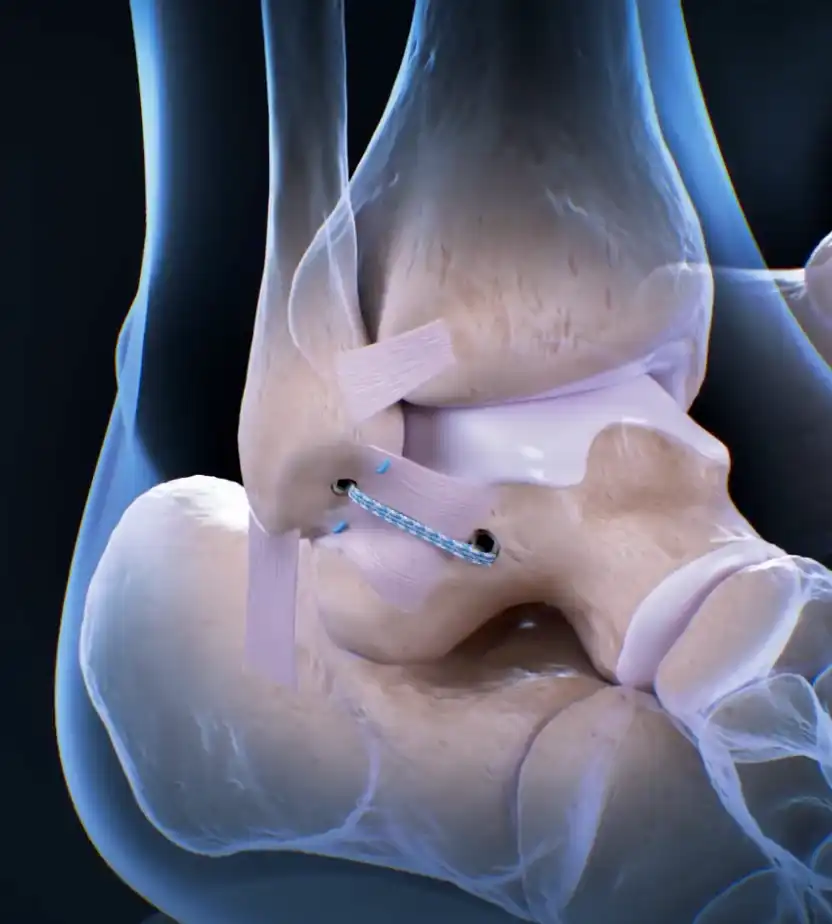
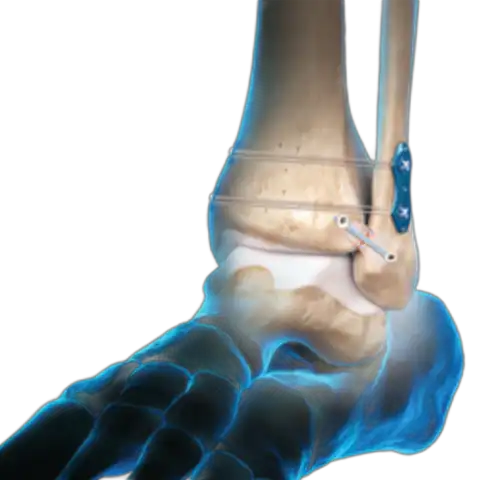

Your doctor may recommend conservative treatments to help relieve ankle pain while you recover from a minor ankle sprain, or they may wait to see if it heals on its own.
Treatments may include:
Rest, ice, compression, elevation (“RICE”)
Anti-inflammatory medicines
Physical therapy
Sports tape or ankle support braces
Hope it heals on its own
If you suffer from repetitive ankle sprains that continue to damage your ankle ligaments, consult a foot and ankle specialist, as chronic ankle instability or a high ankle sprain may not heal on its own.
Patient Stories

Kobe's Story
Syndesmosis TightRope Repair
InternalBrace Procedure
When Clemson running back Kobe Pace suffered a mid-season ankle injury, innovative surgical techniques from Arthrex helped him recover quickly and return to the field stronger than ever.

Meagan's Story
Syndesmosis TightRope Repair
InternalBrace Procedure
College soccer player Meagan Brown overcame chronic ankle instability through innovative surgical techniques and returned to the field stronger and pain-free for her final season.

Riley’s Story
Syndesmosis TightRope Repair
After a high ankle sprain sidelined quarterback Riley Leonard during his college career, he made a full recovery with help from the Arthrex TightRope XP implant system.

Sammy and Sam's Story
Syndesmosis TightRope Repair
InternalBrace Procedure
Two Clemson Football Players Back to Full Strength After Suffering the Same Injury, Thanks to Arthrex Innovation

Leah's Story
InternalBrace Procedure
Athletic trainer and former gymnast who underwent two ankle reconstructions with poor results prior to InternalBrace augmentation.

Caitlin's Story
InternalBrace Procedure
Former soccer player and outdoor/running enthusiast who underwent two ankle surgeries before her InternalBrace augmentation.

Mike's Story
InternalBrace Procedure
Firefighter who suffered a complete tear of his lateral ankle ligament when he stepped down from the truck onto a curb and rolled his ankle.

Estee's Story
InternalBrace Procedure
Avid runner and skier who, after coping with ankle instability since high school, is back to having fun with her family after her InternalBrace augmentation.
.png)
Bethany's Story
InternalBrace Procedure
Ultrarunner and mountain biker who experienced multiple ankle sprains before securing her repair with the InternalBrace procedure and getting back on the trails.

